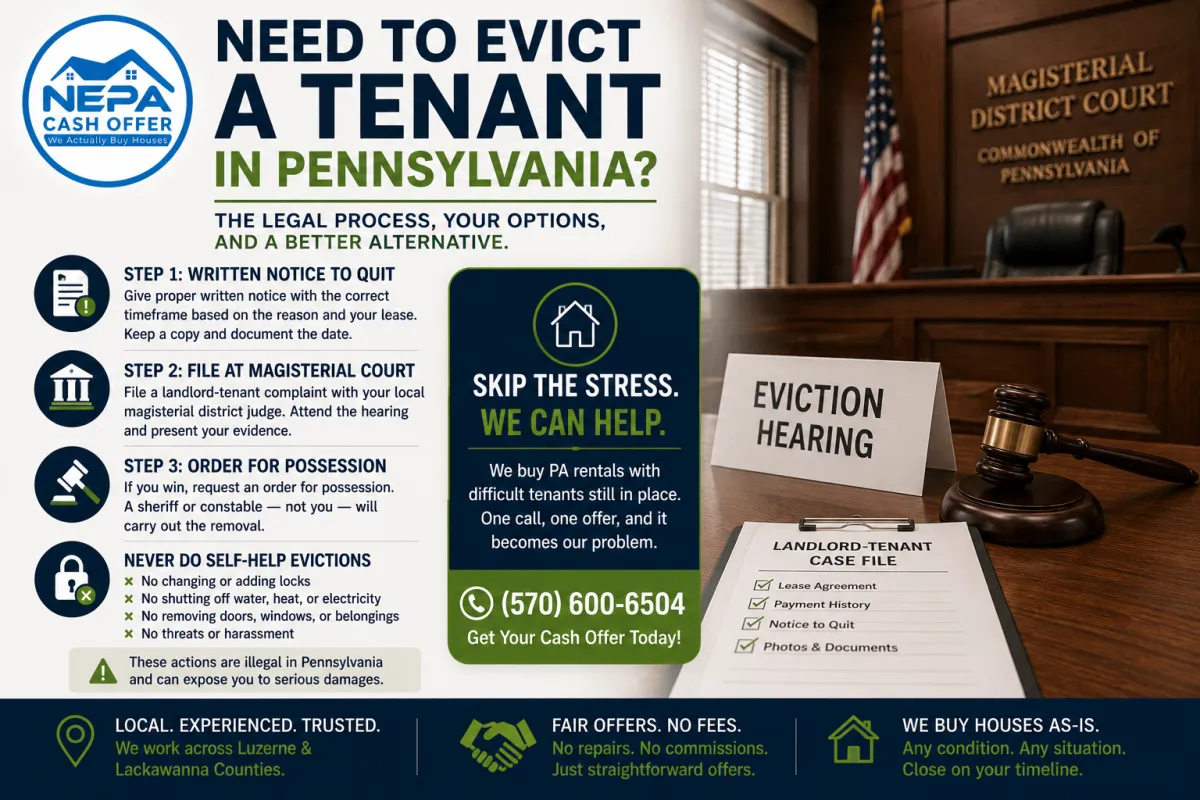
How to Get a Tenant Out Legally in Pennsylvania
If you have a tenant who has stopped paying rent, broken the lease, or stayed past their term, the single most important thing to know is this: in Pennsylvania, there is exactly one legal way to remove a tenant, and it runs through the court system. Everything else — changing locks, shutting off utilities, hauling belongings to the curb — can turn a tenant problem into a landlord liability. Here is the process in plain English, and an honest look at the alternative many Luzerne County landlords choose instead.
Step 1: The written notice to quit
Pennsylvania evictions start with a written notice to quit — a formal letter telling the tenant why the tenancy is ending and how long they have to leave or fix the problem. The required timing depends on the reason (nonpayment versus end of lease term, for example) and on what your lease says; some leases modify notice requirements, which is one more reason to read yours carefully. Deliver the notice properly, keep a copy, and document the date. Skipping or botching this step is the most common way landlords lose in court and have to start over.
Step 2: Filing at the magisterial district court
If the notice period runs out and the tenant has not left or cured the issue, the next step is filing a landlord-tenant complaint with the magisterial district judge who covers your property's area — whether that is Hazleton, Nanticoke, Olyphant, or anywhere else in the region. There is a filing fee, a hearing gets scheduled, and both sides tell their story. Bring your lease, your ledger of payments, your notice to quit, photos, and any written communication. If you win, the court issues a judgment for possession — but the tenant still has time to appeal or move before anything physical happens.
Step 3: The order for possession — and only then
If the tenant still does not leave after judgment, you request an order for possession, and a constable or sheriff — not you — carries out the actual removal. Start to finish, a contested Pennsylvania eviction commonly takes one to several months, plus filing costs, lost rent, possible attorney fees, and whatever condition the unit is left in. It works, but nobody comes out of it feeling like a winner.
What you can never do: self-help evictions
- No changing or adding locks to keep the tenant out
- No shutting off water, heat, or electricity
- No removing doors, windows, or the tenant's belongings
- No threats or harassment to pressure them into leaving
These self-help tactics are unlawful in Pennsylvania even when the tenant is clearly in the wrong, and they can expose you to damages. However frustrated you are — and we have talked with landlords who had every reason to be — the court path or a negotiated exit are the only safe roads.
The middle path: cash for keys
Many landlords resolve things faster by simply making a deal: a written agreement where the tenant leaves by a set date, broom-clean, in exchange for a payment. It can feel wrong to pay someone who owes you money — until you compare it to months of lost rent and court dates. Put any agreement in writing, and have an attorney look it over.
Or skip the fight: sell with the tenant in place
Here is the option most landlords do not realize they have: you do not need the tenant out to sell. We buy occupied rentals across NEPA — including mid-dispute, mid-nonpayment, even mid-eviction — and the situation transfers to us at closing. No repairs, no cleanout, a genuine as-is sale, with the process explained step by step on our how it works page and in detail on our sell a rental page. We have done this for owners in Exeter, Wilkes-Barre, and towns across Lackawanna County — our reviews include a few of their stories, and our comparison page shows how the numbers work against listing later.
A Luzerne County rental we bought after the tenant situation had gone sideways
 BEFORE
 AFTER
AFTERA straight answer, either way
If you are set on keeping the property, follow the legal process, document everything, and get counsel. If you are done — truly done — we will make you a written cash offer with the tenant right where they are. We are a local family business (meet us here) serving every community on our areas page, and we handle inherited properties with holdover tenants too. Call (570) 600-6504 or get in touch online — no pressure, and no judgment about how the situation got here. We have seen it all, and there is always a way out.


