Can You Sell a House Before Paying Off the Mortgage in PA?
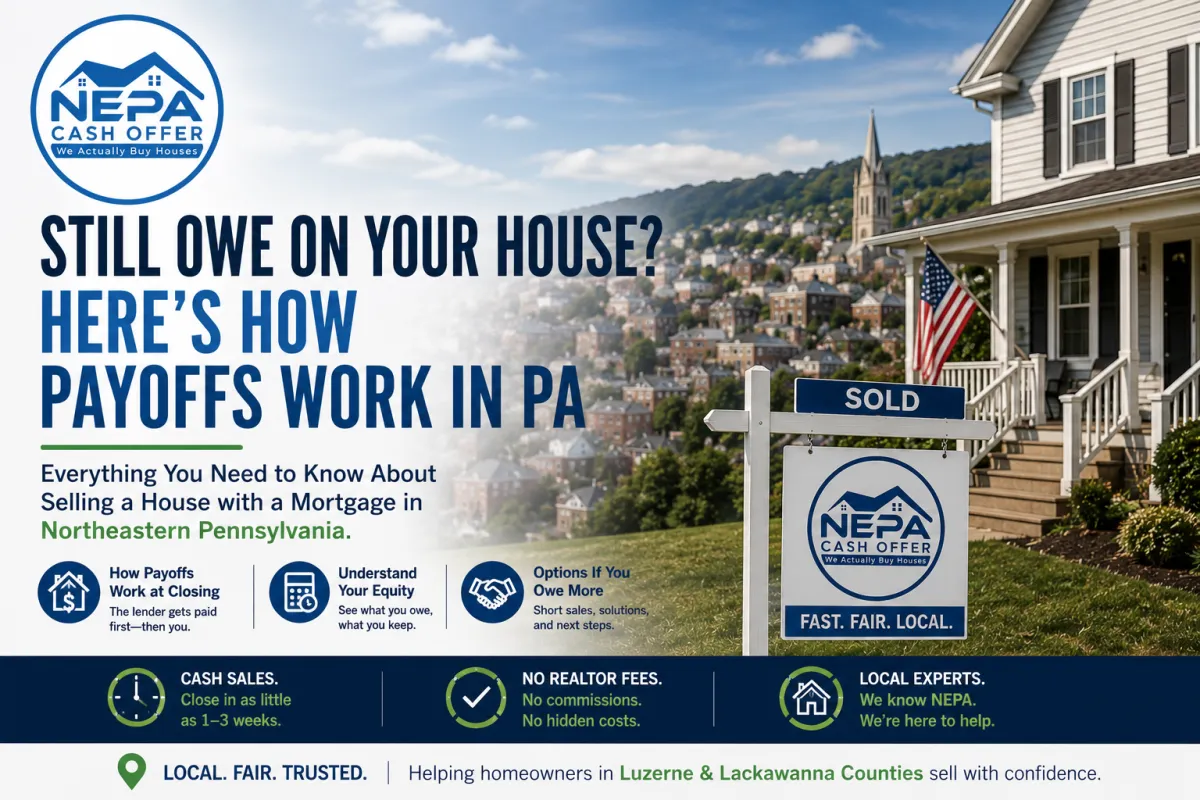
Here is a worry we hear all the time in Scranton and across the valley: I still owe on my mortgage, so I cannot sell yet, right? Wrong, and happily so. Most people who sell a house in Pennsylvania still have a mortgage on it. The loan simply gets paid off at closing out of the sale proceeds, and whatever is left after that comes to you. Let us walk through exactly how that works, step by step.
How Payoff at Closing Actually Works
When you sell, a title company handles the money. Before closing, they request a payoff statement from your lender, which is an official letter stating exactly what it takes to satisfy your loan on a specific date, including remaining principal, interest through the payoff day, and any small fees. At closing, the buyer's money goes to the title company first. The title company pays your lender directly, the lender releases its lien on the property, and the remainder is wired to you or handed over as a check.
You never need to come up with the payoff money yourself, and you never sign the house over while still owing on it. It all happens in one sitting. This is the same process whether you sell to a traditional buyer or to a cash buyer like us; our how it works page shows where that step falls in the overall sequence, and our post on how a cash sale works in NEPA goes deeper.
The Equity Math, in Plain English
Your equity is simply what the house sells for minus what you owe and minus selling costs. A quick example with round numbers:
- Sale price: $150,000
- Mortgage payoff: $90,000
- Closing costs and transfer tax: roughly $3,000 to $5,000 in a typical cash sale
- What you walk away with: roughly $55,000 to $57,000
In a traditional listed sale you would also subtract agent commissions and often repair credits, which is why the highest sale price does not always mean the most money in your pocket. Our side-by-side comparison walks through that math honestly. And because we buy as-is, there is nothing to spend on the house before selling, which matters a lot for older homes in Kingston or Hazleton that would need real work to list.
What If You Owe More Than the House Is Worth?
This is the harder situation, and it deserves a straight answer. If your payoff is higher than what the house would sell for, you have a few paths. You can bring the difference to closing if you have the savings. You can wait and keep paying the loan down. Or, in some cases, your lender may agree to a short sale, which means accepting less than the full payoff to release the lien. Short sales require lender approval and patience, but they can be a way out, especially if payments have become unmanageable. If you are behind on payments, read our page on stopping foreclosure, because acting early keeps more options open.
We have helped homeowners from Mountain Top to the Abingtons think through these numbers, including folks managing an inherited home that came with a mortgage attached. There is no shame in any of it. The math is just the math, and knowing it puts you back in control.
Getting Your Payoff Statement
Want real numbers instead of estimates? Call your mortgage servicer, the company you send payments to, and ask for a payoff statement, sometimes called a payoff quote. It is free, it does not obligate you to anything, and it is usually good for about 30 days. Your monthly statement balance is not the same thing, since it excludes accrued interest and fees, so always use the official payoff figure when you are doing the math.
Mortgaged Homes We Have Bought, Before and After
 BEFORE
 AFTER
AFTERThe Bottom Line
A mortgage does not lock you into a house. It just becomes a line item at closing. We are a family-owned company that has bought several hundred homes across Lackawanna County and Luzerne County, many with mortgages on them, and the title companies we work with handle payoffs every single week. You can read more about our family business, see what past sellers say in our reviews, or check whether we buy in your town on the areas we serve page. When you are ready for a no-pressure conversation about your numbers, get in touch or call (570) 600-6504.


