Facing a Tax Sale in Luzerne or Lackawanna County? Selling Before the Upset Sale
Short answer: in Luzerne and Lackawanna counties, a house usually becomes eligible for the county's upset tax sale once its real estate taxes are two years delinquent. Until the property is actually sold at a tax sale, you still own it, which means you can still pay the taxes, sign an installment agreement with the tax claim bureau, or sell the house and have the back taxes paid out of the proceeds at closing. The longer you wait, the fewer of those options are left, so the first step is to get an exact payoff from the bureau.
Unpaid property taxes come up often in Scranton, Wilkes-Barre, and the towns around them, whether after a job loss, medical bills, or an inherited house whose tax bills went to an empty address. Here is how the process works locally and what you can do about it.
How a property ends up at a tax sale in Pennsylvania
Most of Pennsylvania, including Luzerne and Lackawanna counties, follows the Real Estate Tax Sale Law (Act 542 of 1947). In plain English, it works like this:
- The bill goes unpaid. If your county, municipal, or school real estate taxes are not paid to the local tax collector, they are returned to the county tax claim bureau.
- Interest starts. Lackawanna County's Tax Claim Bureau says delinquent taxes are returned to the bureau by January 31 for the prior year, and interest begins to accrue at 9 percent a year starting February 1.
- Two years delinquent. Both counties say properties with taxes delinquent for two years are eligible for the upset sale. Before the sale, the law requires notice by publication, certified mail, and posting on the property, plus personal service if the home is owner-occupied.
- The upset sale. This is the first auction where a delinquent property can be sold. It is held once a year, usually in September.
One wrinkle: some Pennsylvania municipalities and school districts collect delinquent taxes under a different law, the Municipal Claims and Tax Liens Act, which can lead to a sheriff sale instead. If your notice came from a law firm rather than the county tax claim bureau, ask which process applies. Our guide to what happens at a sheriff sale in Pennsylvania covers that side.
How it works in Luzerne County
Luzerne County's tax claim bureau is run through its agent, Elite Revenue Solutions. According to the bureau's upset sale page, the upset sale is held once a year, properties with taxes two years delinquent are eligible, and a sale is subject to all liens and encumbrances. The 2026 tax sales page lists a special upset sale on April 23, a judicial sale on August 6, and the annual upset sale on September 24, 2026, all at King's College in Wilkes-Barre. Its contact page lists the Wilkes-Barre and Hazleton offices.
Luzerne County also lets the bureau grant extensions for severe economic hardship, with a separate program for elderly owners; applications are on its severe economic hardship page.
How it works in Lackawanna County
According to Lackawanna County's Tax Claim Bureau, the upset tax sale takes place in September, after the second Monday and before the end of the month. It is not a free and clear sale. Unsold properties may go to a private sale, then to a judicial sale the following spring, where the court is asked to approve a sale free and clear of liens and mortgages, and finally to a repository list. The bureau is at 123 Wyoming Avenue in Scranton and asks owners to call before paying to get the correct amount.
Your options before the sale date
1. Pay the taxes in full
Call the bureau for an exact payoff with interest and costs; do not rely on an old bill.
2. Sign an installment agreement
The Real Estate Tax Sale Law lets an owner, before the sale and at the bureau's option, sign a written agreement to stay the sale by paying 25 percent of what is owed and the balance in no more than three installments within a year. Missing a payment can send the property back to the next upset sale, so only sign if the payments are realistic.
3. Ask about hardship programs
See the Luzerne County hardship extensions above. In Lackawanna County, ask the bureau directly what is available. A free HUD-approved housing counselor can also help you sort through a budget.
4. Sell the house before the sale
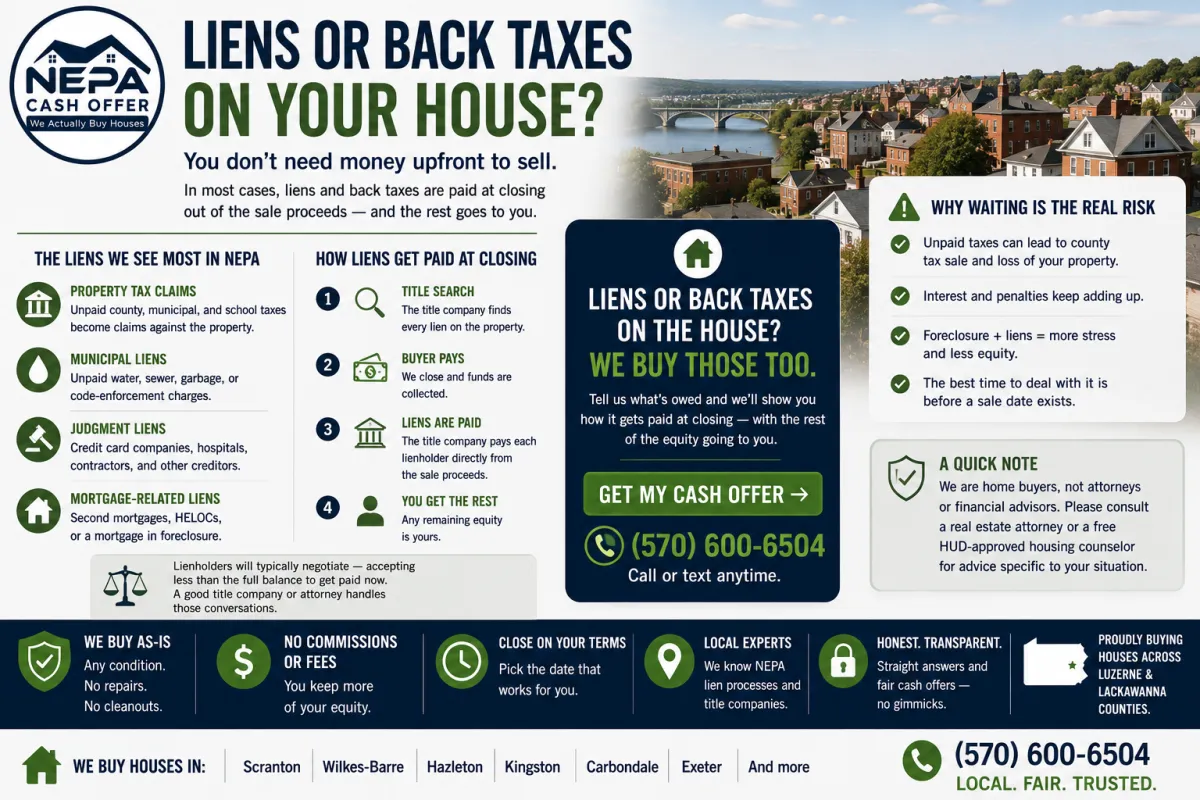
If keeping the house is not realistic, or the house needs more work than you can take on, selling it before the tax sale is often the way to protect the equity you have. At closing, the title company pays the tax claim bureau, any mortgage, and other liens from the proceeds, and the rest goes to you. You do not have to come up with the tax money first. Our article on selling a house with liens or back taxes explains how those payoffs work.
Why timing is everything
The hard deadline is the sale itself. Under the Real Estate Tax Sale Law, once a property is actually sold at a tax sale, the owner generally loses the right to pay the taxes and keep it.
So work backwards from the sale date:
- Get the payoff in writing from the bureau, plus your mortgage payoff.
- Gather the deed, notices, and any estate papers. See the paperwork you need to sell a house in Pennsylvania.
- Leave room for the title search and payoff letters.
- Tell the bureau if you have a signed agreement of sale and ask what they need before the sale date. Whether a sale is stayed is up to the bureau.
Listing with an agent can bring a higher price if you have months to spare. When a sale date is close, or the house needs work a buyer's lender will not accept, an as-is sale to a cash buyer can let you pick a closing date that lands before the auction. A cash sale is usually at a lower price than a retail sale, so compare the two. Our cash vs. agent comparison lays them side by side, and our post on closing costs when selling a house in Pennsylvania shows what comes out at the closing table.
The stages at a glance
| Stage | What it means | Can the owner still sell? |
|---|---|---|
| Taxes go unpaid | The local tax collector returns the unpaid bill to the county tax claim bureau, and interest starts to run | Yes; the claim is paid from the proceeds at closing |
| Two years delinquent | The property becomes eligible for the upset sale; notices are mailed, published, and posted on the property | Yes, but the clock matters; get a payoff and plan the closing date |
| Upset sale | Public auction, usually in September; the buyer takes the property subject to existing liens such as a mortgage | Only until the property is actually sold |
| Judicial sale | For properties that did not sell; a court can order the sale free and clear of most liens | Only until it is sold; ask an attorney right away |
| Repository | Unsold properties go on a list the bureau can sell from by accepting offers | Ask an attorney; ownership questions get complicated here |
Inherited a house with unpaid taxes?
When a parent passes away, tax bills can pile up unnoticed at the empty house. The executor or administrator can usually sell, but needs letters from the Register of Wills first, so start the estate paperwork and call the tax claim bureau the same week. Our inherited homes page and our plain-English guide to selling an inherited house walk through the estate side, and if the house is sitting empty, see our tips on selling a vacant house.
Watch out for pressure tactics
Tax sale lists are public, so owners often get letters and calls from buyers. Never sign a deed without a title company or attorney involved, be wary of anyone asking for money up front to "handle" your taxes, and get offers in writing. Our guide on how to spot a legitimate cash buyer lists warning signs, and our article on how much cash home buyers pay explains how offers are usually figured.
How a sale like this works with us
We ask about the sale date, who is on the deed, and what else is owed, look at the house, and give you a written, no-obligation offer. If you move forward, a title company handles the closing and pays the bureau and other lienholders from the proceeds. Our how it works page explains each step. If the numbers do not work, or another option fits you better, we will say so. We work with homeowners across Luzerne County and Lackawanna County. Behind on the mortgage too? See your options when you are behind on payments.
Frequently asked questions
How many years of unpaid property taxes before a house goes to tax sale in Luzerne or Lackawanna County?
Both county tax claim bureaus say a property becomes eligible for the upset tax sale once its real estate taxes have been delinquent for two years. Interest and costs keep adding up in the meantime.
Can I still sell my house if it is listed for an upset tax sale?
Generally, yes. You still own the house until it is actually sold, so you can sell it yourself. The delinquent taxes, interest, and costs are normally paid out of your sale proceeds at closing. The catch is timing: the sale has to close, or the bureau has to agree in writing, before the upset sale date.
What is an installment agreement with the tax claim bureau?
Pennsylvania's Real Estate Tax Sale Law lets an owner, before the sale and at the bureau's option, sign a written agreement with the bureau that stays the sale. The owner pays 25 percent of the amount due up front and the rest in no more than three installments within one year. Missing a payment can put the property back on the next upset sale list, so only sign one if the payments are realistic.
Does an upset tax sale wipe out my mortgage?
Usually not. Both counties describe the upset sale as subject to existing liens and encumbrances, which means a mortgage generally stays attached to the property. A property that does not sell may later go to a judicial sale, which a court can order free and clear of most liens.
Is there help if I cannot afford to pay my back taxes?
Luzerne County has ordinances that let its tax claim bureau grant extensions to owners with a severe economic hardship, including a separate program for elderly owners, and the application forms are on the bureau's website. In either county, ask the bureau what applies to you, or talk with a free HUD-approved housing counselor.
The bottom line
A tax sale notice is serious, but until the property is actually sold, you still have choices: pay, set up an installment agreement, ask about hardship help, or sell and let the closing pay the taxes. Get an exact payoff and the sale date from your county tax claim bureau, and do not wait until the week of the auction. When you want a real number to look at, visit the NEPA Cash Offer homepage, request a cash offer, or call (570) 600-6504.


