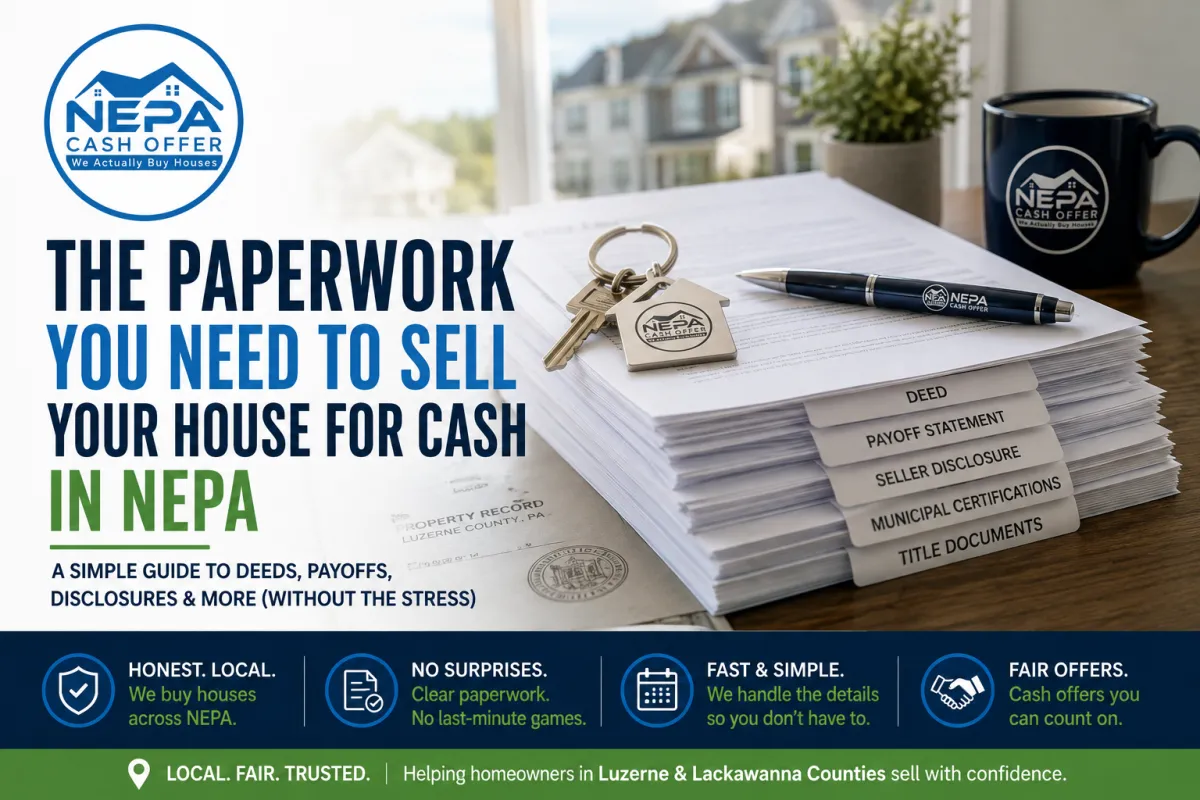
The Paperwork You Need to Sell a House in Pennsylvania
For a lot of the sellers we meet in Wilkes-Barre and across Luzerne County, the paperwork is scarier than the sale itself. Where is the deed? What is a payoff statement? Do I really have to fill out that long disclosure form? Take a breath. After several hundred closings, we can tell you the stack of documents is smaller and friendlier than it looks, and a good title company does most of the heavy lifting. Here is a plain-English tour.
The Deed: Proof You Own the House
The deed is the recorded document showing you own the property. Good news: you do not need to find your paper copy. Deeds are recorded at the county courthouse, and the title company will pull yours as part of the title search. Where the deed gets interesting is when the person on it has passed away, which is common with inherited homes. An estate may need to be opened before the house can transfer, and we have helped many families in Olyphant and around Lackawanna County navigate exactly that.
The Mortgage Payoff Statement
If you still owe on the house, your lender provides a payoff statement showing the exact amount needed to release their lien, good through a specific date. You just request it, or authorize the title company to. The same goes for home equity lines, judgments, or unpaid municipal bills, which all get settled from your proceeds at closing. You do not write checks ahead of time; it comes out of the money on the table.
The PA Seller Disclosure, and the As-Is Nuance
Pennsylvania law generally requires sellers to complete a property disclosure statement covering known material defects: the roof, the basement, the systems, and so on. Here is the nuance people miss. Selling as-is does not usually erase your duty to disclose what you know. As-is means the buyer is not asking you to fix anything, not that problems get hidden. The difference, as we explain in our post on what as-is really means in NEPA, is that an experienced cash buyer expects the wet basement and prices it in from day one, so an honest disclosure does not blow up your deal. There are limited situations where a shorter form may apply, such as certain estate sales, which is a good question for the title company or an attorney.
Municipal Certifications and Inspections
This one varies town by town, and NEPA has a lot of towns. Some boroughs require a certificate of occupancy or a point-of-sale inspection before a property changes hands. Others require sewer, water, or tax certifications showing the accounts are current. A house in Exeter can have different requirements than one ten minutes away in Moosic. The title company or your buyer should know each municipality's quirks. Because we buy across all of Northeastern PA, handling these local requirements is a routine part of our process, not a surprise at the finish line.
From Cluttered and Complicated to Clean and Closed
 BEFORE
 AFTER
AFTERTaxes and Numbers at the Closing Table
At closing, the title company prepares a settlement statement listing every credit and charge: the payoff, prorated property taxes, transfer tax, and any liens being cleared. Pennsylvania charges a realty transfer tax on most sales, and who pays which share is negotiable in the agreement. Property taxes get prorated to the day of closing so you only cover the part of the year you owned the home. You will sign the deed and a small stack of standard documents, and the title company records everything and wires or hands you the proceeds. That is it. No pop quizzes.
The Easiest Version of All This
When you sell to a cash buyer, most of this paperwork is handled for you, which is a big part of why cash sales close so quickly. Whether your situation involves a rental property, a looming foreclosure deadline, or just a house you are done with, we coordinate the title company, the certs, and the payoffs. Read what neighbors say on our reviews page, then get in touch or call (570) 600-6504. We will tell you exactly which documents your sale needs, for free, even if you never sell to us.


